
US Powerball's main selection consists of five distinct white-ball labels from 1–69 and one red Powerball from 1–26, according to the operator's game page checked for this guide. Under the uniform separate-pool model, one complete line has jackpot-match probability 1/[C(69,5)×26] = 1/292,201,338.
The denominator is not a mysterious published constant. It is the number of permitted complete outcomes, and each factor has a specific job.
Count the white-ball sets C(69,5) = 11,238,513. The white-ball order does not matter for the full match, so the ordered count is divided by 5!. Each of those sets can be paired with any of 26 red-ball outcomes, giving 292,201,338 complete combinations.
A white label and the red label may share the same numeral because their pools are separate. A generator that forbids that coincidence would exclude valid Powerball lines.
Why matching five without the red ball is different A fixed line matches all five white labels with probability 1/C(69,5). To match those five and miss the red ball, multiply by 25/26. The result is 25/292,201,338, whose inverse is 11,688,053.52.
Matching all five white labels regardless of the red result is a broader event than the specific five-without-red category. This is why reading a prize table carefully matters: a phrase that sounds similar can describe a different numerator.
General partial-match arithmetic Exactly r white matches has probability C(5,r)C(64,5−r)/C(69,5). Multiply by 1/26 for a red match or 25/26 for a red miss. The nine prize categories in the actual game select particular combinations of those conditions; not every mathematical category is a paid prize.
The formula describes matches. Prize amounts, multipliers, jurisdiction-specific conditions and payment options require the official rules and are not derived from the match probability alone.
Why recent results do not identify better labels If complete draws are independent and uniform, any valid line selected from past information still has full-match probability 1/292,201,338. Hot-number rankings, AI scores and balanced patterns do not alter that conditional calculation.
Five consecutive white labels are one main set, just like five scattered labels. Their broader category may have a different total probability, but your submitted line does not cover the entire category.
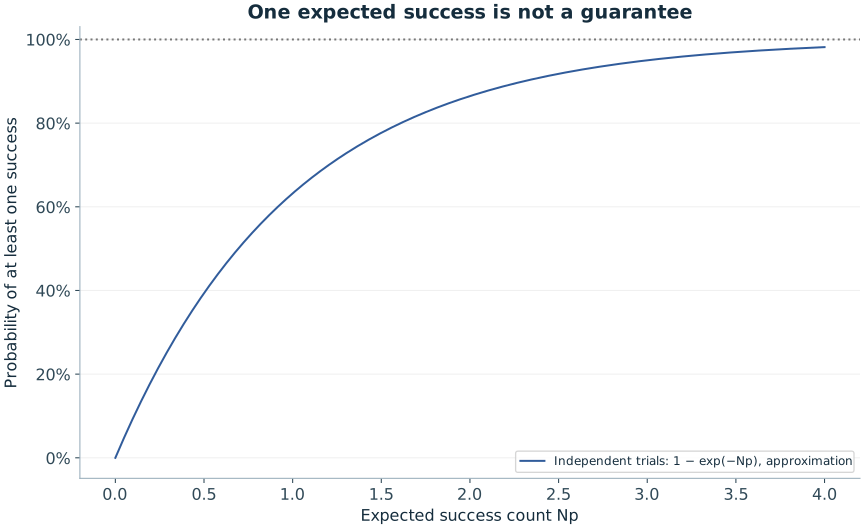
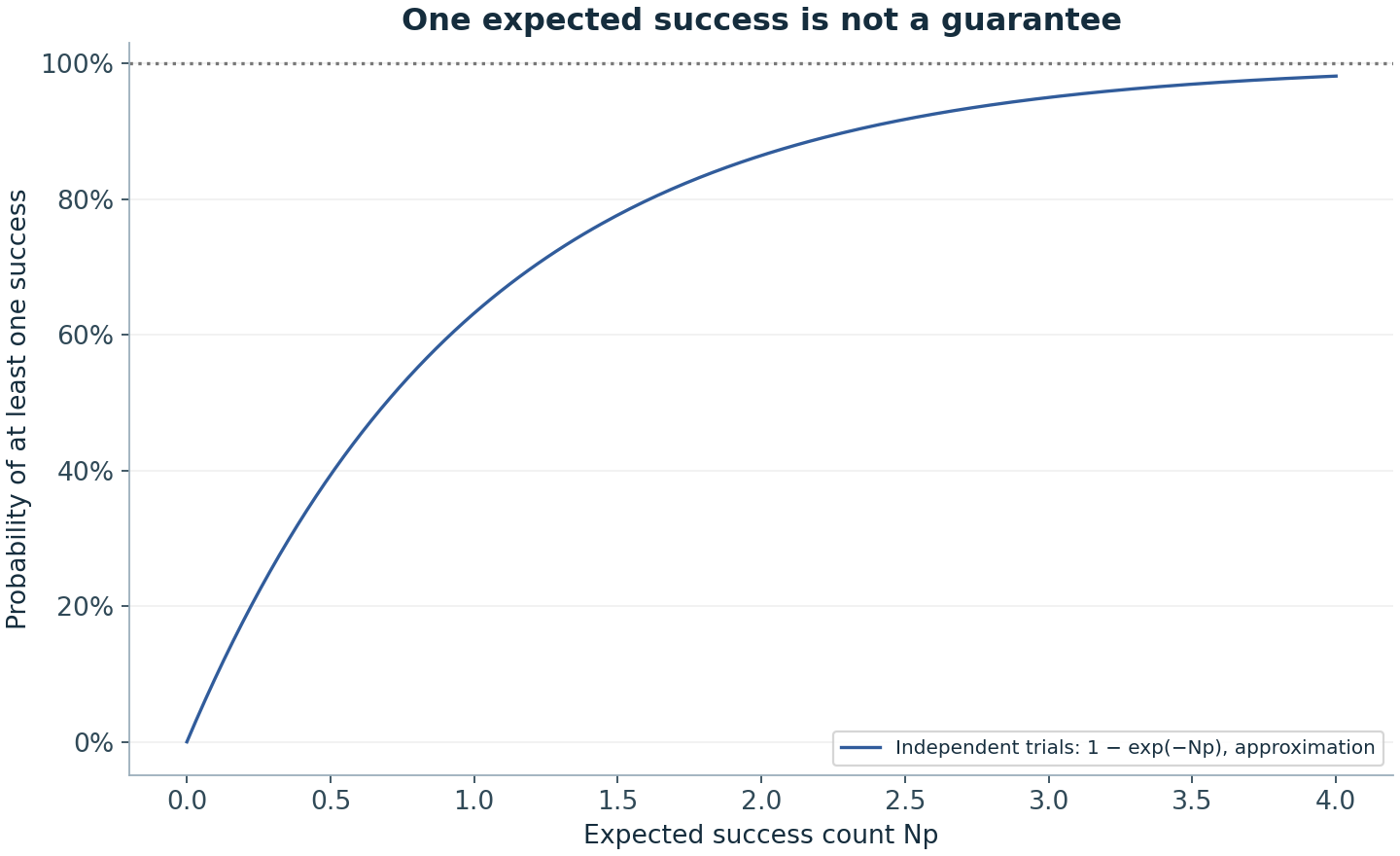
Compare entries without overstating the improvement Ten distinct complete lines cover ten outcomes, giving 10/292,201,338 for one full-match draw. Ten copies of the same line cover one. Across independent draws, use 1−(1−p)^d for at least one match rather than presenting dp as an exact probability.
Use the Powerball preset in the combinations calculator to inspect the factors, then open the associated generator if you want a random valid line. RoomForChance does not register an entry, sell a ticket or claim an advantage. This guide concerns the stated US number matrix and one draw; other branded formats or additional drawings must be evaluated using their own rules.
Leave the selection to chance
If you want a valid random game line, open the relevant generator. A generated line is not an official entry or a prediction, and it does not improve the probability of a specified valid combination.
Sources and further reading
The worked examples and derivations are RoomForChance explanations. Operator sources establish game parameters; research sources support the specific points identified above. University links are references, not endorsements.
- Powerball · Official game informationPool definitions checked 22 September 2026; the displayed jackpot and other live information can change.
- Joe Blitzstein and Jessica Hwang · Harvard Stat 110 / Introduction to ProbabilityUniversity-level further reading on counting, conditioning and probability models.
Continue the argument
How Bonus Balls and Separate Number Pools Change Lottery Odds
Separate special-ball pools and bonus balls drawn from the main pool need different formulas. Learn the distinction with worked examples.
Mega Millions Odds: The 70 × 24 Matrix Explained
Calculate current Mega Millions jackpot odds as C(70,5) × 24, understand the old-denominator trap and separate multipliers from number selection.
Quick Pick vs Choosing Your Own Numbers: Does Either Have Better Odds?
Compare Quick Pick, Lucky Dip and personal selections while separating draw probability, winner counts and possible prize sharing.