
For the Set For Life selection matrix of five distinct main labels from 1–47 and one Life Ball from 1–10, the number of complete outcomes is C(47,5)×10 = 15,339,390. One specified complete line therefore has full-match probability 1/15,339,390 under the uniform separate-pool model.
This calculation concerns matching the selected numbers. A game's payment schedule is a different part of its rules and does not change the number of possible selections.
Count each pool in its own way The five main labels form an unordered set without repetition, giving C(47,5) = 1,533,939 possibilities. The Life Ball is one selection from a separate ten-label pool, giving ten possibilities. Each main set can pair with each Life Ball.
The same numeral can occur as a main label and as the Life Ball because the pools are separate. A generator should not remove that numeral from one pool merely because it appeared in the other.
Matching the main set while missing the Life Ball If the five main labels match but the Life Ball does not, there are nine acceptable Life Ball outcomes for that condition. Its probability is 9/15,339,390, or approximately one in 1,704,376.67.
If you ignore the Life Ball entirely, the probability of matching the five main labels is 1/1,533,939. The broader event includes both Life Ball matches and misses. This distinction is useful when reading shorthand descriptions of prize tiers.
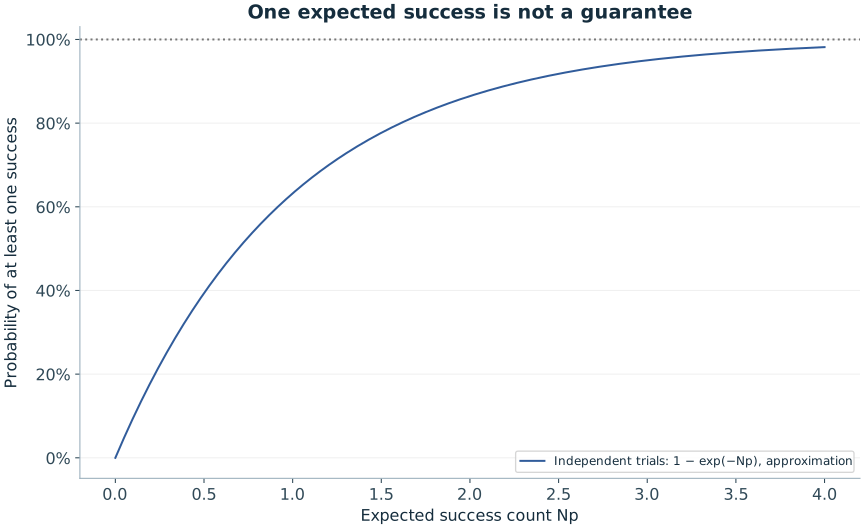
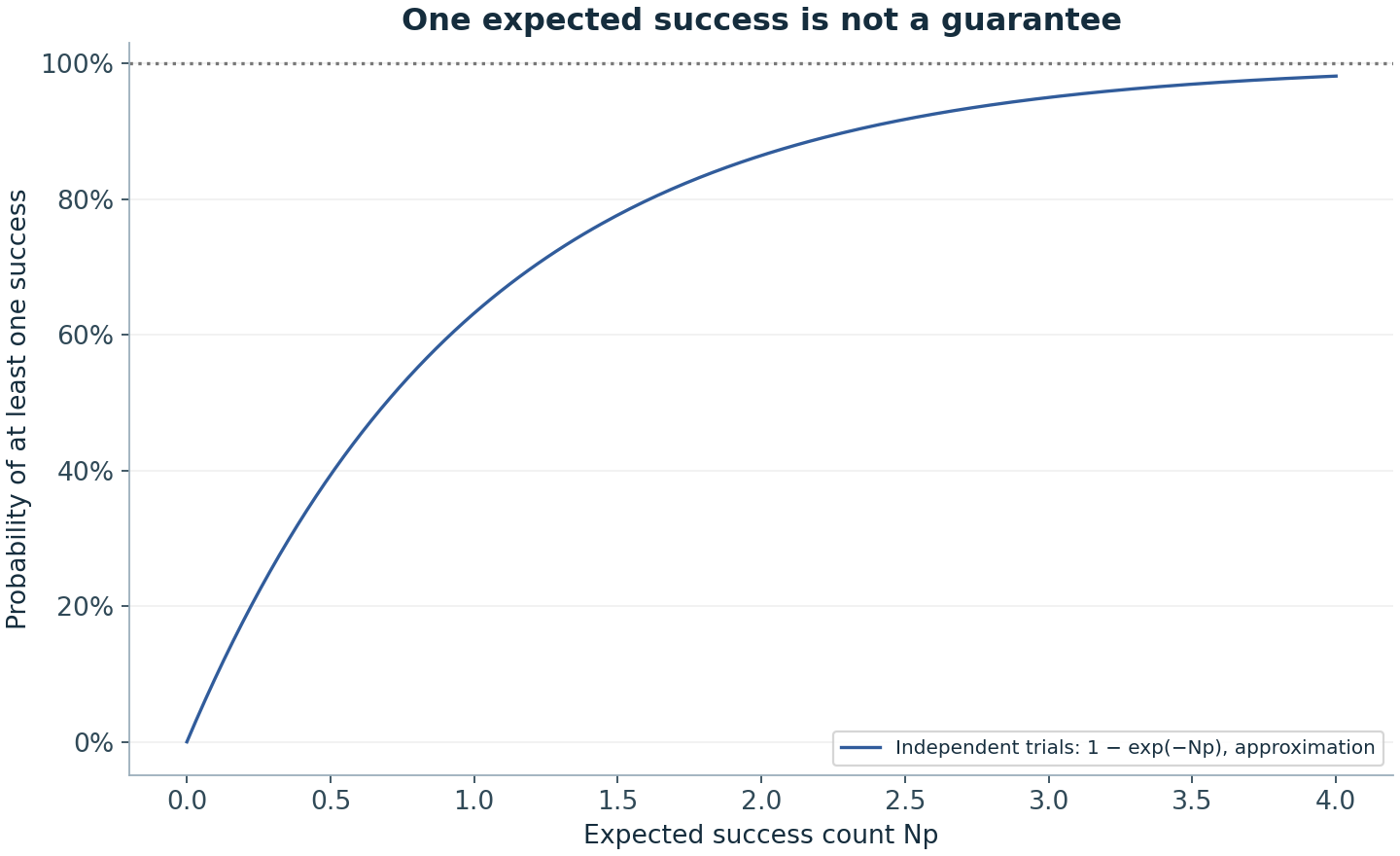
Partial main matches Exactly r main matches have probability C(5,r)C(42,5−r)/C(47,5). Multiply by 1/10 for a Life Ball match or 9/10 for a miss. The formula describes exact match categories; the official table determines which categories receive which prizes.
A calculator should not convert this into an “any prize” claim without adding exactly the paid categories and checking all relevant rules. Nor does a full-match probability describe the financial value of a payment schedule by itself.
Why the smaller denominator is not a complete comparison Compared with a game with a larger outcome space, this matrix has a higher full-match probability per line. That mathematical statement alone does not rank the products financially. Costs, prize amounts, sharing, conditions and the definition of success differ.
For educational comparisons, display the matrices and denominators together. Avoid a single “best lottery” label that hides the user's actual comparison question.
Using the generator correctly The linked generator creates a valid random selection for these pools. It does not purchase or register an entry, and it does not promise that an apparently balanced line has better odds. Re-generating until a line feels lucky changes your selection preferences, not the probability of that specified line in a fair draw.
Use the calculator preset to reproduce the two factors, then consult the operator for current conditions. The general articles on separate pools and exact matches explain how to adapt the reasoning if a game's matrix changes. The arithmetic remains transparent precisely because the assumptions are displayed with the result.
Leave the selection to chance
If you want a valid random game line, open the relevant generator. A generated line is not an official entry or a prediction, and it does not improve the probability of a specified valid combination.
Sources and further reading
The worked examples and derivations are RoomForChance explanations. Operator sources establish game parameters; research sources support the specific points identified above. University links are references, not endorsements.
- The National Lottery · Player informationOfficial source describing Lotto, EuroMillions, Set For Life and Thunderball selection pools, checked 22 September 2026.
- Joe Blitzstein and Jessica Hwang · Harvard Stat 110 / Introduction to ProbabilityUniversity-level further reading on counting, conditioning and probability models.
Continue the argument
How Bonus Balls and Separate Number Pools Change Lottery Odds
Separate special-ball pools and bonus balls drawn from the main pool need different formulas. Learn the distinction with worked examples.
How to Calculate the Probability of Matching Lottery Numbers
Derive the hypergeometric formula for exactly r matches and distinguish exact, at-least and separate-pool matching events.
Quick Pick vs Choosing Your Own Numbers: Does Either Have Better Odds?
Compare Quick Pick, Lucky Dip and personal selections while separating draw probability, winner counts and possible prize sharing.