
Canada's LOTTO 6/49 combines mechanisms that should not be compressed into one unexplained probability. For the Classic Draw's six-main-number match, the outcome count is C(49,6) = 13,983,816. The separate Gold Ball Draw uses an assigned number and a different probability structure, as described by OLG.
A generator of six main labels can represent the Classic selection. It cannot manufacture an officially assigned Gold Ball Draw number.
The Classic main-number count Six distinct labels are selected from 1–49 and order is irrelevant. The ordered count 49×48×47×46×45×44 is divided by 6! to give 13,983,816 sets. A specified main line has full-match probability one divided by that count under a uniform model.
This is the same abstract 6/49 matrix used in several of our educational experiments. Those experiments are synthetic model studies, not copies of Canada's historical results.
The Bonus Number affects particular tiers For a bonus drawn from the remaining main pool, matching five main labels and the bonus has probability 6/C(49,6) = 1/2,330,636. The derivation chooses the five matching ticket labels, one outside main label, and then the one missing ticket label as bonus.
The bonus does not multiply the six-main-match denominator because the six-main condition already identifies the main set. Treating it as a separate player-selected pool would model the wrong event.
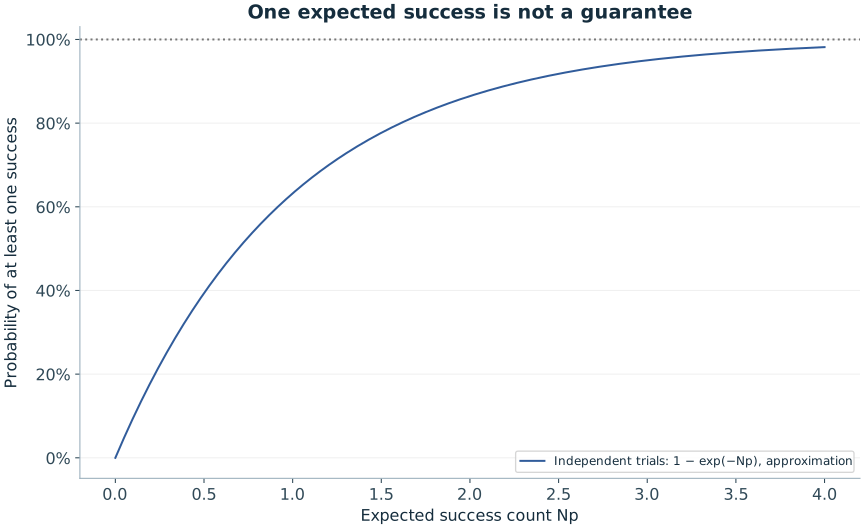
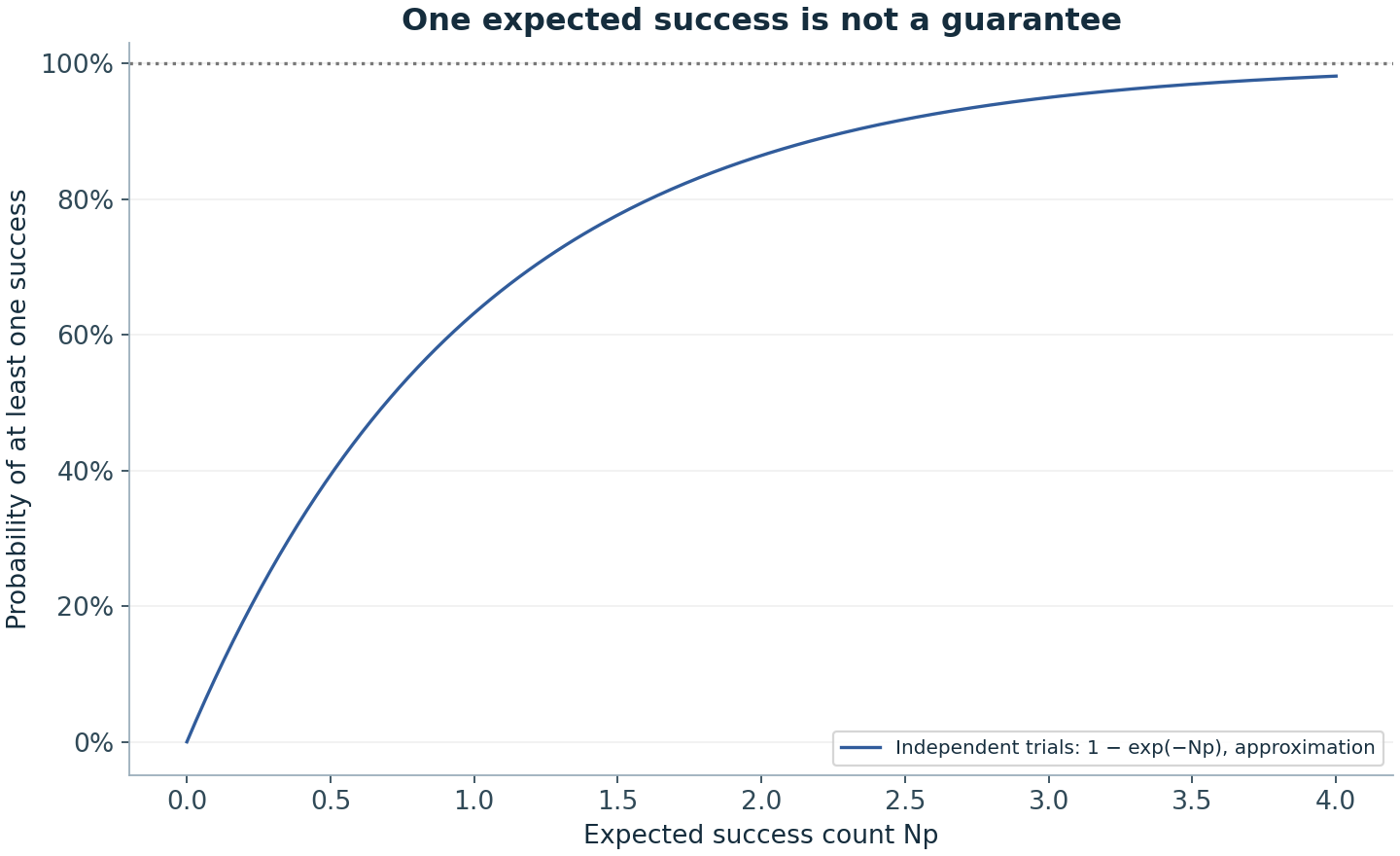
Why the Gold Ball denominator is different OLG describes the chance of a Gold Ball Draw number being selected in terms of the number of such numbers issued for that draw. The subsequent jackpot distinction depends on the available prize-ball configuration. These are not determined by C(49,6).
Consequently, a fixed “one in 13,983,816” label should be attached to the Classic six-main match, not presented as the chance of every large prize associated with an official play. Variable participation and separate draw mechanics need their own inputs.
Shared prizes introduce another question Where a prize is divided among winning selections, the amount per winner depends on how many winning selections exist. This does not change the probability that your specified line matches the main draw. It changes the allocation conditional on a match.
A preference for unusual labels may affect sharing only through other players' actual choices. Without appropriate current selection data, a precise financial advantage cannot be inferred from a line's appearance.
How to use the linked resources Choose the Canada Classic preset to reproduce C(49,6). The associated generator provides six distinct main labels and explicitly leaves the assigned Gold Ball mechanism to the official operator. For prize conditions and current availability, follow the OLG sources.
The general overlap, parity and consecutive-number articles apply to the Classic main-number model. They explain why repeated labels and visually structured lines occur naturally. None supplies a method for predicting either the next Classic set or the separately assigned winning code.
Leave the selection to chance
If you want a valid random game line, open the relevant generator. A generated line is not an official entry or a prediction, and it does not improve the probability of a specified valid combination.
Sources and further reading
The worked examples and derivations are RoomForChance explanations. Operator sources establish game parameters; research sources support the specific points identified above. University links are references, not endorsements.
- OLG · LOTTO 6/49 odds and payoutsDistinguishes Classic Draw tiers, Gold Ball Draw probabilities and prize sharing; checked 22 September 2026.
- OLG · LOTTO 6/49 game informationOfficial product information and links to game conditions, checked 22 September 2026.
- Joe Blitzstein and Jessica Hwang · Harvard Stat 110 / Introduction to ProbabilityUniversity-level further reading on counting, conditioning and probability models.
Continue the argument
How Many Lottery Combinations Are There? The C(n,k) Formula
Derive the lottery combination formula, work through C(49,6), and learn when separate pools or ordered digits require a different count.
How Bonus Balls and Separate Number Pools Change Lottery Odds
Separate special-ball pools and bonus balls drawn from the main pool need different formulas. Learn the distinction with worked examples.
Are Birthday Numbers a Bad Idea? Winning and Sharing Are Different
Why birthday selections have equal draw odds but may concentrate player choices, and why that does not establish a guaranteed financial advantage.